
Why Every Small Business Still Needs a Website in 2026
Learn why every small business still needs a website in 2026. Discover how websites build trust, attract customers through search, and support your social media marketing.
The Buzz HQ Editorial Team - Led by AJ “Buzz” Eichman
3/11/20265 min read
If you run a small business today, you’ve probably wondered something at least once: “Do I really need a website anymore?” Maybe you already post regularly on Facebook or Instagram. Maybe word-of-mouth keeps you busy enough. And maybe building a website feels like one more thing on a very long to-do list. I’ve seen a lot of businesses wrestle with this question over the years.
The short answer is simple: yes, every small business still needs a real website in 2026. Not because it’s trendy and not because some marketing guru says so, but because that’s how customers decide who to trust before they ever call you or walk through your door. The good news is technology has come a long way. A website doesn’t need to be complicated or expensive anymore. What it needs to do is simple: help customers find you, show them what you do, and make it easy to contact you. Let’s walk through why a website still matters—and what a good one actually needs.
Social Media Isn’t Enough
Social media can be a great tool for small businesses. It helps you stay visible, share updates, and keep your name in front of customers. A quick post or photo can remind people that your business exists. But there’s an important difference between being visible and being chosen, and that’s where social media alone falls short.
First, you don’t actually control your social media pages. The platform does. Algorithms change all the time, which means the number of people who see your posts can drop overnight. I’ve watched that happen more times than I can count. Your posts also compete with an endless stream of other content—family photos, memes, news, and ads. Social media is designed to keep people scrolling, not necessarily to help them make a buying decision.
A website works differently. It’s the one place online where you control the experience. When someone visits your website, they’re not distracted by everything else in their feed—they’re focused on your business. Think of it this way: social media is like renting a booth at a busy market, while your website is owning your own storefront. Both are useful, but one gives you much more control.
Customers Search Before Visiting
One of the biggest changes I’ve seen over the past twenty years is how customers make decisions. These days, people almost always research first. They search on Google, look at reviews, and check websites before deciding where to go.
In fact, most consumers search online for local businesses at least once a week, and many do it daily. And here’s the important part: many customers have already decided which business they’re going to use before they ever show up. That decision often happens online.
If your business doesn’t have a website, two things usually happen. Customers struggle to find clear information about you, or they move on to a competitor who looks more established online. I’ve seen it happen countless times. A simple website gives search engines something to work with—your services, location, hours, and helpful information that customers are already searching for.
Over time, even a modest website can bring in a steady stream of people who were already looking for exactly what you offer. For a small business, that can make a big difference.
Websites Build Trust
Trust is everything for a small business. Before people spend money with you, they want to feel confident that you’re legitimate and reliable. Your website is often the first place where that trust gets built.
Research consistently shows that most consumers see businesses with websites as more credible than businesses that only rely on social media pages. And when you think about it, that makes sense. A good website tells customers several things right away: that you take your business seriously, that you’re organized, that you’re easy to contact, and that you have a professional presence online.
Even small details matter. Clear hours, a real address, photos of your work, and customer testimonials all help build confidence. Without a website, potential customers are left piecing together information from scattered sources—reviews on one site, a social page somewhere else, maybe a photo tagged by a customer. That patchwork can create uncertainty, and when customers feel uncertain, they usually choose the business that appears clearer and more professional online.
What a Basic Business Website Should Include
Here’s something I like to remind business owners: your website does not need to be complicated to be effective. In fact, the best small business websites are usually pretty simple. They focus on the basics and do them well.
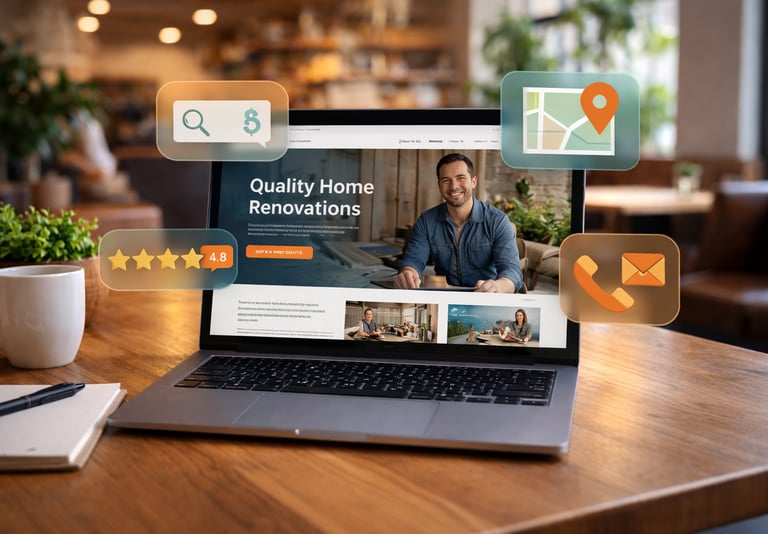
Your homepage should act like a digital front door. Within a few seconds, visitors should understand what you do, who you help, and how they can contact you. A clear headline, a short explanation of your services, and a simple call-to-action—like “Request a Quote” or “Call Today”—often works best. Clarity beats cleverness every time.
You should also have a services page that clearly explains what you offer. Customers want to know exactly what you do and what they can expect. Short descriptions, helpful photos, and even general price ranges can help people decide whether your business is the right fit for them.
An About page is also important, especially for local businesses. Small businesses have something big companies don’t—a real story. A short explanation of how you got started, a photo of you or your team, and a little background about why you do the work you do can go a long way toward building connection and trust.
Customer reviews and testimonials also play a major role. Over the years, I’ve noticed something consistent: customers trust other customers more than they trust marketing. A few strong testimonials on your website can quickly build credibility and reassure visitors that others have worked with you and had a good experience.
Finally, your website should make it extremely easy for customers to contact you. Clear phone numbers, email addresses, contact forms, business hours, and location information should all be easy to find. If someone is ready to reach out, the process should feel effortless.
Mobile-Friendly, Fast, and Easy to Use
Most visitors today will view your website on their phone. If the site loads slowly or looks broken on a small screen, people leave quickly. In simple terms, this just means your website should adjust properly to different screen sizes and load quickly on mobile connections. Speed and usability are no longer optional—they’re expected.
Website Design and Maintenance Matter Too
Building a website is only the first step. Two other things play a big role in how well it performs: design and maintenance.
Good website design isn’t just about making something look nice. It’s about making your site easy to navigate, easy to read, and easy for visitors to take the next step. Thoughtful design quietly guides customers toward contacting you, booking an appointment, or making a purchase.
Then there’s website maintenance. Just like a car needs occasional service, websites need updates too. Software updates, backups, security checks, and small improvements help keep everything running smoothly. Ignoring maintenance can lead to slow performance, broken pages, or security issues. A little regular upkeep prevents much bigger problems later.
The Bottom Line
A small business website today isn’t just an online brochure. It’s a digital asset that works for you around the clock—helping customers find you through search, answering their questions, and building trust before they ever meet you.
Social media, local listings, and word-of-mouth are all still valuable, but they work best when they point back to a central place that you own and control. For most businesses, that place is a simple, well-built website that grows with your business over time.
If you’re still on the fence, consider this: somewhere nearby, someone is searching online for a business that offers exactly what you do. The real question isn’t whether you can afford to build a website—it’s whether you can afford not to.
© 2026 The Buzz HQ. All Rights Reserved.
The Buzz HQ
Websites • Marketing • Advertising
Helping Small Businesses Grow Online
The Buzz HQ provides practical digital marketing services designed for small businesses. From websites and social media to content creation and ongoing support, we help local businesses stay visible and competitive online.
Service Area
By using this website, you consent to the terms outlined in this Privacy Policy.