
How Much Should a Small Business Website Cost?
How much should a small business website cost in 2026? Learn realistic price ranges, ongoing costs, and what actually affects website pricing so you can budget wisely and avoid overpaying for features you don’t need.
The Buzz HQ Editorial Team - Led by AJ “Buzz” Eichman
3/12/20268 min read
Quick Answer: Small Business Website Cost in 2026
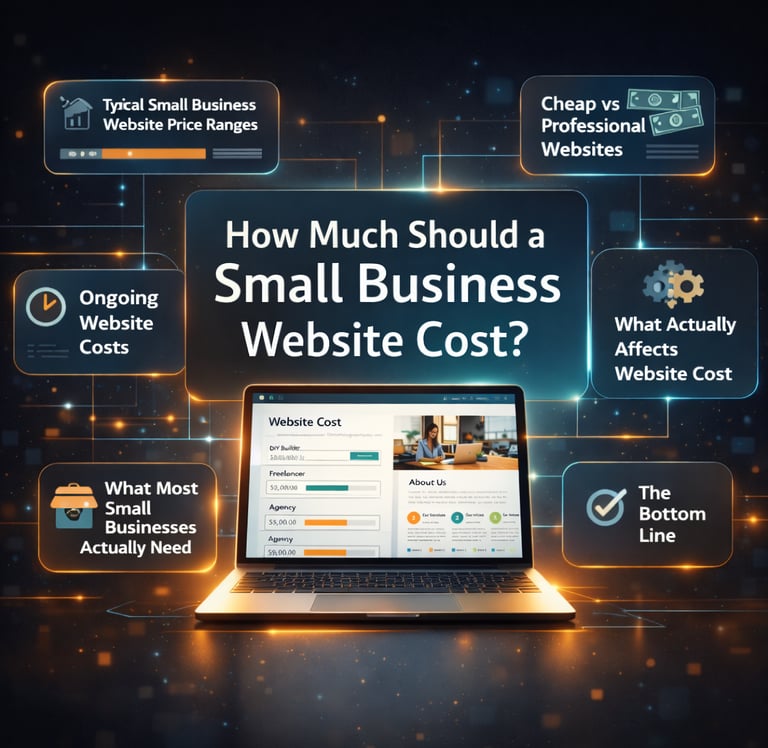
If you’re looking for a quick estimate, here’s the realistic range most small businesses fall into when building a website today.
Website Type - Typical Cost
DIY Website Builder - $300 – $800 per year
Freelancer or Small Studio - $2,000 – $5,000
Agency Website Project - $5,000 – $10,000+
Monthly Maintenance - $50 – $250 per month
For most local businesses, the sweet spot is usually a professionally built website in the $2,000–$5,000 range, with basic maintenance to keep everything secure and running smoothly.
The exact cost depends on things like the number of pages, design customization, features (like booking or ecommerce), and whether the project includes search engine optimization.
If you want a more personalized estimate, you can try the Website Cost Estimator from The Buzz HQ, which calculates a rough range based on your business type and features.
Typical Small Business Website Price Ranges
Most small business websites fall into three common categories: DIY builders, freelancer-built sites, and agency-built projects. Each option comes with its own price range, level of customization, and amount of work required from you as the business owner.
Building the website yourself using tools like Wix or Squarespace is usually the lowest-cost option. These platforms provide templates and hosting so you can assemble the site yourself. In most cases, the main expenses are the platform subscription and a domain name. Builder plans generally cost somewhere between $15 and $60 per month, and a domain name usually runs around $10 to $35 per year. When you add everything together, many DIY websites end up costing between $300 and $800 for the first year. For businesses just getting started, that can be a practical way to establish an online presence.
Hiring a freelancer or small web design studio is often the middle ground. Instead of learning everything yourself, you’re paying someone with experience to design and build the site for you. Most small business websites built this way fall somewhere between $1,500 and $6,000 depending on the number of pages, design complexity, and features included. A common range for a five-to-ten-page small business website is around $2,000 to $4,500. At this level you typically receive a professionally designed site that works well on mobile devices and includes basic search engine optimization.
Working with a full agency tends to cost more because the services are broader. Agencies often include strategy, branding guidance, marketing planning, and SEO setup in addition to design and development. Projects in this category often start around $5,000 and can reach $10,000 or more depending on complexity. Businesses that rely heavily on online marketing or need advanced features sometimes choose this route because the additional planning can help the website perform better as a marketing tool.
Ongoing Website Costs
One thing many business owners overlook is that websites have ongoing costs as well. Even simple websites need hosting, security updates, and occasional maintenance. Hosting alone can cost anywhere from $10 to $50 per month depending on the platform and server quality.
Maintenance plans are another common expense. These plans usually include things like software updates, backups, security monitoring, and small content changes. For most small businesses, maintenance services typically fall somewhere between $50 and $250 per month. When you combine development costs with hosting and maintenance, the total investment for a professionally built small business website usually lands somewhere between $2,000 and $10,000 with a few hundred dollars per year in ongoing expenses.
Cheap vs Professional Websites
One reason this topic is so confusing is that people are often comparing two very different types of websites. On one side, you have the cheapest possible option. On the other side, you have a website that’s built strategically to generate customers.
A cheap website usually means a basic template build, minimal customization, and little attention to things like search optimization, mobile performance, or long-term maintenance. These sites can work as a basic online presence, but they often struggle to generate leads or perform well in search engines.
A professional website focuses on results rather than just appearance. It typically begins with understanding the business, the target audience, and the goals of the website. The design is customized to the brand, the site structure is optimized for search engines, and the layout is designed to guide visitors toward contacting the business. That additional planning and attention to detail is what makes professional projects cost more upfront, but it’s also what allows the website to actually support business growth.
What Actually Affects Website Cost
Several factors influence how much a website costs regardless of who builds it. One of the biggest is the complexity of the features. A simple brochure-style website with a handful of informational pages is much easier to build than a site with booking systems, customer portals, or ecommerce functionality.
The number of pages and the amount of content also play a role. Each page requires design work, layout structure, and content preparation. If the business owner already has photos, text, and a clear structure for the site, development tends to be faster. If the project includes copywriting, photography sourcing, or design assets, those tasks add to the overall cost.
Design customization can also influence pricing. Adjusting colors and fonts on an existing template requires far less time than designing a completely custom layout from scratch. For many small businesses, a professionally implemented template is perfectly sufficient, but businesses in competitive industries sometimes invest more in design to differentiate themselves from competitors.
The platform used to build the website can also impact both upfront and long-term costs. Website builders often have lower startup costs but limit customization and flexibility. Content management systems like WordPress may require more setup but provide greater control over the site in the long run.
What Most Small Businesses Actually Need
After working with small businesses for many years, one pattern becomes very clear. Most businesses don’t need a huge, complicated website. What they need is a clear, trustworthy site that helps customers understand what they do and how to contact them.
For many local businesses, that means a website with five to ten pages covering the essentials: a homepage, service descriptions, an about page, testimonials or reviews, and a contact page. The site should load quickly, work well on mobile devices, and provide simple ways for customers to reach out.
When you look across different pricing guides and real-world projects, a realistic starting point for many businesses looks something like this: a DIY website builder for a few hundred dollars per year, a freelancer-built site in the $2,000 to $5,000 range, or a more strategic agency project between $5,000 and $10,000. The right choice depends on your budget, how important your website is to generating leads, and how comfortable you are managing technology yourself.
Want a Quick Estimate for Your Website?
One thing I’ve learned after building websites for small businesses for more than twenty years is that every project is a little different. Two companies in the same industry might need completely different websites depending on their goals, their market, and how they plan to use their site to attract customers.
That’s why generic price estimates you see online can only go so far. They give you a ballpark range, but they can’t account for the details that make your business unique.
If you’re trying to get a clearer idea of what your own website might cost, the easiest next step is to run a quick estimate based on your specific situation. A simple website calculator can look at things like the number of pages you need, the features you want, and the type of business you run to give you a much more realistic range.
If you’d like to see where your project might land, you can try the Website Cost Estimator from The Buzz HQ. It only takes a minute and can give you a better sense of what kind of investment makes sense for your business.
👉 Try the Website Cost Estimator
And if you already have a website but aren’t sure whether it’s helping your business grow, you can also request a free website audit. Sometimes a few improvements can make a much bigger difference than starting from scratch.
Frequently Asked Questions
How much does it cost to build a small business website?
The cost of a small business website can vary quite a bit depending on how it’s built and what features it includes. If you build the site yourself using a website builder, you might spend a few hundred dollars per year on tools and hosting. If you hire a freelancer or small web studio, most projects fall somewhere between $2,000 and $5,000 for a professional site with several pages and basic search optimization. Larger agency projects can run $5,000 to $10,000 or more depending on complexity. The right budget really depends on what role your website plays in your business and how important it is for attracting new customers.
Can I build a small business website myself?
Yes, many business owners build their own websites using tools like Wix, Squarespace, or similar website builders. These platforms make it possible to get a basic website online without hiring a developer. The trade-off is that you’ll spend time learning the platform, designing the pages, and troubleshooting issues when they come up. For some businesses, especially those just getting started, this approach works fine. If your website becomes an important source of leads or customers, though, many business owners eventually decide to invest in a professionally built site.
Why do professional websites cost more?
Professional websites cost more because they involve more than simply placing text and images on a page. A well-built site usually includes planning, custom design, mobile optimization, search engine setup, and thoughtful layout decisions that guide visitors toward contacting the business. These steps take time and experience, but they also make the website much more effective. The difference between a cheap site and a professional one often shows up in search rankings, user experience, and how many inquiries the site actually generates.
How long does it take to build a small business website?
For a typical small business website with five to ten pages, the process often takes between three and six weeks depending on the scope of the project. Simpler sites can sometimes be completed faster, while larger projects with custom features or ecommerce functionality may take longer. A lot of the timeline also depends on how quickly content, photos, and feedback are provided during the build process. When everything is organized and ready to go, websites can come together much faster.
What monthly costs come with owning a website?
Even simple websites usually have a few ongoing costs. Hosting typically ranges from about $10 to $50 per month depending on the platform and server quality. Many businesses also choose to have maintenance or support services that handle updates, backups, and security monitoring, which can range from $50 to $250 per month. These services help keep the site running smoothly and reduce the risk of technical issues or security problems down the road.
Do small businesses really still need a website?
Yes, websites are still one of the most important tools a small business can have online. Social media and local listings are helpful, but most customers still search online before choosing a business. A website gives potential customers a central place to learn about your services, see reviews, and contact you directly. It also helps your business appear in search results when people are looking for the products or services you offer.
👉 Why Every Small Business Still Needs a Website in 2026
The Bottom Line
When people ask how much a small business website should cost, they’re usually hoping for one simple number. In reality, the cost depends on the level of functionality, design, and strategy involved.
The most practical way to think about it is this: your website should cost enough to give you a fast, trustworthy, easy-to-use site that helps bring in customers, but not so much that you’re paying for features you’ll never use. For many businesses today, a website isn’t just a digital brochure. It’s the foundation of how customers discover your business, evaluate your credibility, and decide whether to work with you.
If you’ve spent any time Googling “how much should a small business website cost,” you’ve probably seen numbers all over the map. Some articles claim you can build a site for free, while others say it might cost $10,000 or more. That kind of range isn’t very helpful when you’re trying to figure out a realistic budget for your own business. After building websites for small businesses for more than twenty years, I can tell you the truth usually falls somewhere in the middle. In 2026, a small business website can cost a few hundred dollars a year if you build it yourself, or several thousand dollars for a professionally designed site that’s built to generate leads and grow with your business.
The real question isn’t what the average price is. The better question is what you actually need your website to do. Once you understand that, the cost range starts to make a lot more sense.
© 2026 The Buzz HQ. All Rights Reserved.
The Buzz HQ
Websites • Marketing • Advertising
Helping Small Businesses Grow Online
The Buzz HQ provides practical digital marketing services designed for small businesses. From websites and social media to content creation and ongoing support, we help local businesses stay visible and competitive online.
Service Area
By using this website, you consent to the terms outlined in this Privacy Policy.